No Small Relief: Kingston’s Convenience Deficit, Mapped
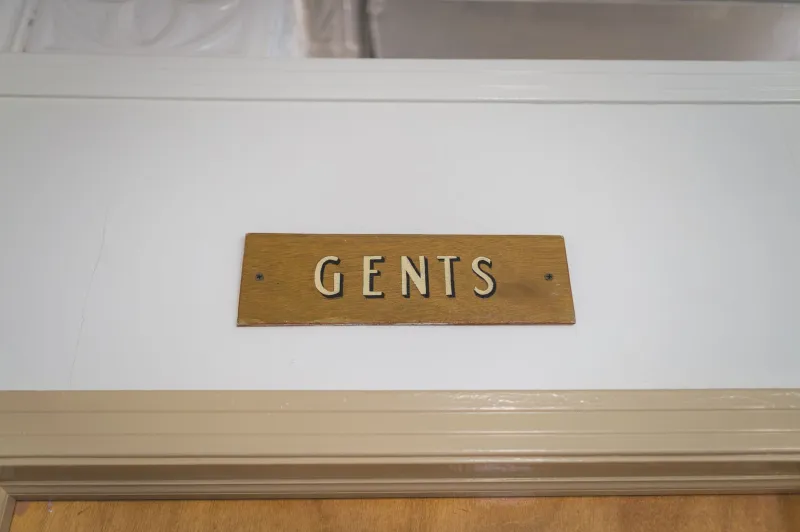
On a wet Saturday in October, the fingerpost in Kingston’s Market Place still points toward the public conveniences beside the Ancient Market. The door is locked. A laminated notice refers visitors to “the nearest alternative facilities”, which the council’s website places a twelve-minute walk away — longer when the bridge is busy and longer still for anyone pushing a buggy or using a stick.
It is a small scene, but it captures a larger question for a borough that presents itself as a destination. Kingston markets its riverside, its ancient market and its shopping district to visitors from across south-west London and beyond. Yet the infrastructure that makes a day out manageable — somewhere to go — has been quietly contracting for more than a decade.
What the ledger shows
In July 2026, Kingston Press asked the council for a complete list of public conveniences it operates, the dates on which others have closed, and the money spent on the service. The response, received in September, is a spreadsheet of nine sites, down from twenty-one in 2010. It records a sequence of closures: Tolworth Broadway in 2011, Chessington North in 2014, New Malden High Street in 2016, the Surbiton station approach in 2019, Worcester Park in 2021, and two town-centre sites marked “decommissioned” in 2023.
The council says the pattern reflects “changing footfall and the rising cost of maintaining ageing buildings”. The figures lend that argument some support. The nine remaining facilities cost £412,000 to run in the last financial year, and £390,000 has been budgeted for 2026/27. But the same response shows that £1.6m has been spent since 2016 on repairs, vandalism and temporary closures at sites that were subsequently shut. Closure, in other words, has not always been the cheaper option; it has sometimes been the end point of years of expensive patching.
Nine doors, unevenly distributed
The nine remaining sites are spread unevenly. Four are in or near the town centre: the Market Place, the Guildhall, Canbury Gardens and Fairfield Recreation Ground. The others sit in the car parks at Blagdon Road in New Malden, Victoria Road in Surbiton, Hook Road in Chessington, and two further sites at Tolworth and Old Malden. None is in Worcester Park. None is within half a mile of Kingston station.
Between late September and the end of October, we visited each site three times — once on a weekday morning, once on a Saturday afternoon and once after 6pm. Four had step-free access. Three required a Radar key, with no key available from the council after 5pm. Two were closed at weekends. Only one had a working baby-changing table. At Canbury Gardens the hand dryer had been out of order for so long that a handwritten sign had faded.
These are not dramatic failures. They are the ordinary frictions that determine whether a public facility is usable by the people who most need it: older residents, disabled people, parents with young children, and workers whose jobs keep them outdoors.
The cost of a closed door
The council does not measure usage. No counter data is collected at any of the nine sites, according to the FOI response, which means the case for keeping or closing a facility rests on estimates and anecdote rather than evidence. The £412,000 running cost covers cleaning, staffing, maintenance and security; it does not include the capital backlog, which the council puts at £280,000 for repairs it describes as “pending”.
The absence of data is not neutral. It makes it easier to close a facility without demonstrating that nobody uses it, and harder for residents to argue that a replacement is needed. In 2019, when the Surbiton site closed, the council pointed to the community toilet scheme as an alternative. That scheme now lists fourteen participating businesses, but it has not been audited since 2023, and two venues named on the council’s website told us they had left it.
Access, and the Changing Places gap
For disabled residents the question is sharper. The borough has two registered Changing Places facilities — toilets with hoists, changing benches and enough space for a wheelchair — and neither is in a council-owned building. Both are in venues with their own opening hours. The council’s estate has none.
The same pattern applies to standard accessible toilets. Where they exist, they are often locked, used for storage, or reliant on a key that is distributed at the Guildhall and local libraries but not, in practice, available in the evening. For a borough that has signed up to the principles of inclusive design in its Local Plan, the gap between policy and provision is measurable in doors.
A destination without a door
Kingston’s visitor economy is not a marginal concern. The town centre is promoted as a regional draw, and the council’s own destination marketing leans on the riverside, the market and the theatres. But public conveniences are part of the basic contract between a place and its visitors. Richmond, according to its published list, operates twelve; Merton seven; Sutton six. Kingston operates nine, in a borough that is larger than two of those neighbours and busier than all three on a Saturday.
The comparison is imperfect — different boroughs count different things — but the direction is consistent. Kingston has been withdrawing from a service that its own marketing depends on, and doing so without a published strategy. There is no public toilet strategy in the council’s policy library. The issue does not appear in the 2026/27 budget papers beyond a single line in the Place directorate’s revenue estimates.
What the council says
A council spokesperson said: “We keep our public toilet provision under review and work with local businesses through the community toilet scheme to extend provision. We recognise the importance of accessible facilities and continue to invest where funding allows.”
Asked whether the council would publish usage data or an audit of the community scheme, the spokesperson said the council had “no current plans” to do so. Asked about the Changing Places gap, they said the council “would welcome discussions with partners”.
What would change the picture
None of this is irreversible. A published audit of the community toilet scheme would cost little and would tell residents which venues actually participate. Counters at the nine sites would provide the evidence base that is currently missing. Developer contributions — the borough collects millions in Community Infrastructure Levy each year — could be earmarked for public conveniences, as they are in some neighbouring authorities. And the council could sign a formal access agreement with venues that host Changing Places facilities, so that opening hours are published and reliable.
These are modest proposals. They do not require a new building or a large capital programme. They require the council to treat public toilets as infrastructure rather than as an overhead — and to recognise that a destination is only as welcoming as its nearest open door.
For now, the sign in the Market Place still points to a locked door. The nearest alternative is a twelve-minute walk. For most people that is an inconvenience. For some, it is the difference between going out and staying at home.