The Shifting Line: Kingston’s Primary Places and the Families Left Guessing
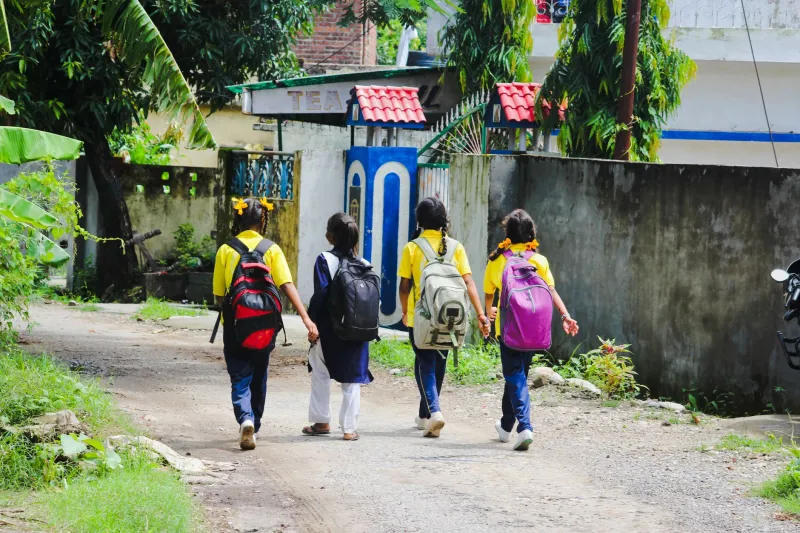
Every autumn, Kingston’s primary school admissions system asks families to make a decision that feels intensely local. The school at the end of the road, the one a child can walk to with a parent, the one where an older sibling already attends: these are the places parents picture when they fill in the form. Yet the mechanism that decides who gets in is not a neighbourhood map in the ordinary sense. It is a set of oversubscription criteria, applied to a moving line.
For the September 2026 intake, as in previous years, Kingston Council coordinated applications across the borough’s primary schools. The published admission arrangements set out the usual priorities: looked-after children, siblings, children of staff in some cases, and then distance from home to school, measured in a straight line. The principle is simple. The effect is less so. A catchment is not a boundary drawn around a school and fixed for a generation. It is the outcome of how many applications arrive, how many places are available and how many of those places are taken by children with a higher priority.
A line that moves
When a school is oversubscribed, the last place offered in a category becomes the de facto cut-off. That distance is often reported after the event as though it were a stable feature of the school. In practice, it can shift from year to year, and sometimes within the admissions round itself. A bulge in births, a housing development, a change in sibling numbers or a decision by a neighbouring school can all move the line. For families in outer wards such as Chessington, Tolworth and parts of Malden, the consequence is a form of local uncertainty that is difficult to plan around.
The council publishes admission arrangements and a school-level overview. Individual schools publish their own criteria. But the data that would allow a resident to understand the geography of places over time is patchy. Last-offered distances are not always presented in a comparable format across schools. Some are given for the final allocation round only. Others are described in general terms. The result is that a parent trying to judge whether a home address is likely to secure a place at a particular school is often working from anecdote and previous years’ informal threads rather than a consistent public dataset.
The gap between publication and explanation
Kingston Press reviewed the publicly available admission arrangements for 2026 and the information published by schools in the borough. The documents set out the rules clearly enough. What they do not routinely provide is an audit of how those rules operate in aggregate. How many places at each school were allocated under each criterion? How far did the last-offered distance move between the first and final rounds? How many applications were made from each ward? These are the questions that would turn a legal framework into a usable map for families.
The council is not alone in this. Admissions authorities across London publish different levels of detail. But Kingston’s position as a relatively small, densely settled borough with sharp differences between wards makes the absence more consequential. A family in a ward with fewer local primary places is not simply choosing between schools. They are navigating a system in which the distance criterion can produce a very different outcome a few streets away.
Siblings, temporary addresses and the rules that shape the line
Sibling priority is one of the most significant factors. It is also one of the least transparent in its cumulative effect. A school with a high number of sibling applications may offer fewer places to children living nearby who have no sibling connection. That is not a criticism of sibling priority, which gives families stability and is widely supported. It is an argument for publishing the numbers. Without them, parents can see the rule but not its consequence.
Temporary addresses raise a different set of questions. Admission authorities require evidence that a family is genuinely resident at the address used on the application. The rules are strict on paper. Enforcement depends on verification, and the appeals process is where disputes often surface. Appeal outcomes are published in aggregate by some bodies, but they are not routinely broken down in a way that shows how many appeals concerned distance, sibling priority or address verification. For a watchdog, that is a gap. Appeals are not just individual stories. They are a signal of where the system is under strain.
What a clearer map would look like
None of this suggests that Kingston’s admissions system is acting unlawfully or that schools are concealing a secret. The criteria are published, the statutory process is followed and appeals are heard independently. The issue is transparency of effect. A parent should be able to see, in one place, how the distance criterion has operated at each school over several years, how many places were allocated under each criterion and how many appeals were lodged and upheld. That is not a radical demand. It is the minimum for a public service that allocates scarce places on the basis of where a child lives.
The council could publish a simple admissions dashboard alongside the annual booklet: last-offered distances by school and round, application numbers by ward, sibling allocations, appeal statistics. Schools could be asked to use a common format. The information would not remove uncertainty, because demand can change. But it would allow families to understand the geography they are navigating rather than guessing at it.
In a borough where the difference between a local place and a longer journey can shape a family’s daily life, the moving catchment line deserves more than a footnote. It deserves a public ledger.