Doors That Don't Fit: Inside Kingston's Disabled Facilities Grant Backlog
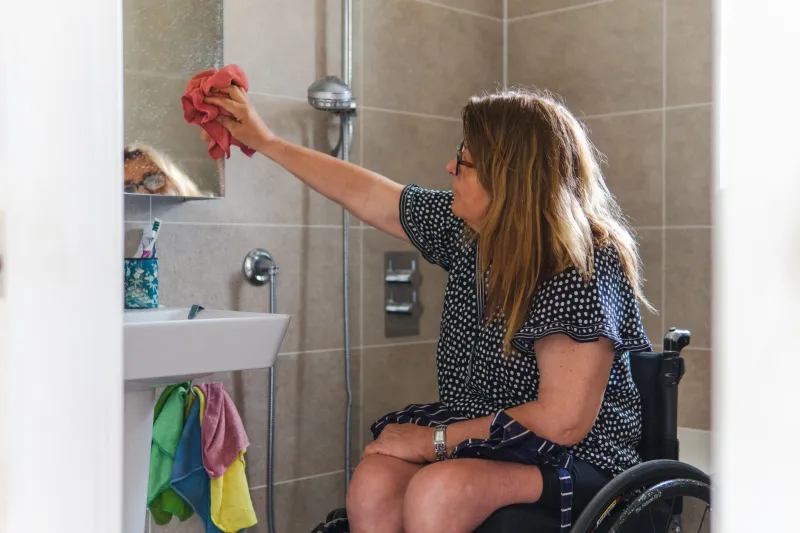
For a disabled resident, a grab rail can be the difference between a bath and a fall. A level-access shower can mean the difference between staying at home and leaving it for good. Kingston's Disabled Facilities Grant is supposed to pay for exactly that kind of work. But the grant is not a switch. It is a sequence of assessments, means tests, surveys and contractors — and in Kingston, that sequence has become a queue.
A statutory grant, an uncertain timetable
The Disabled Facilities Grant is not discretionary. Councils have a statutory duty to provide it for adaptations that are necessary and appropriate, and reasonable and practicable. The maximum grant in England has been £30,000 since 2022. For adults, the grant is means-tested; for children, it is not. Kingston Council administers the scheme through adult social care and housing, with occupational therapists assessing need and a technical officer designing the work.
On paper, the process is clear. In practice, it is opaque. The council does not publish a live waiting list, average waiting times or the number of applications in the pipeline. Residents cannot see where they are in the queue, how long each stage takes, or how many cases are closed before work begins. That absence of public data is the first accountability gap.
The assessment maze
Most applications begin with an occupational therapy referral. The OT decides whether an adaptation is needed and what kind. A financial assessment follows. Then comes a technical survey, a specification, a tender and a start date. Each stage has its own waiting list, and each can stall.
Applications can be rejected at any point. The statutory tests are broad: is the work necessary and appropriate? Is it reasonable and practicable? For adults, can the applicant afford a contribution? Those tests are meant to protect public money. But they also give the council discretion, and discretion without published criteria is hard to challenge.
Residents who have been through the process describe a familiar pattern: a long wait for an OT visit, a longer wait for a surveyor, then a gap before work begins. For those with progressive conditions, the adaptation can arrive after the need has changed. A ramp fitted in spring may be useless by winter. A bathroom adapted for one stage of an illness may not suit the next.
Who gets helped first
Priority is supposed to go to those at greatest risk: people being discharged from hospital, people who have fallen, people at risk of safeguarding. That is sensible. But the council does not publish its prioritisation criteria in detail, and it does not publish how often those criteria are applied.
In the absence of data, rumours fill the gap. Residents say applications with a social worker, a family advocate or a local councillor behind them move faster. The council says it follows statutory guidance. Both things can be true. The question is whether the system rewards need or noise.
The contractor question
Kingston uses a framework of approved contractors for adaptation works. A framework can improve quality and speed up procurement. It can also narrow the field. Small local builders say they are shut out of the work. Residents say they wait for a surveyor, then wait for a contractor, then wait for a date.
The council does not publish performance data for the framework: how many jobs are completed on time, how many are reworked, how many contractors are active, how much is paid per job. Those are basic questions for a service that spends public money on vulnerable residents. Without answers, the framework is a black box.
An underspend in plain sight
The Disabled Facilities Grant is funded through the Better Care Fund. Each council receives an allocation and is expected to spend it. When a council underspends, it can present that as efficiency. In this context, underspend is a warning. It means the pipeline is not processing cases fast enough, or that eligible residents are not applying because they do not know the grant exists.
The council's budget papers do not present DFG spend in a single, accessible place. That makes it hard for residents to judge whether the allocation is being used. But the absence of a public waiting list and the absence of published performance data suggest a pipeline that is not keeping pace with need. Kingston Press has asked the council for its DFG outturn for the last financial year and its projection for 2026-27.
What residents are asking for
The requests are modest. A public dashboard showing applications received, assessed, approved, completed and rejected. A clear appeal route with timescales. Publication of contractor performance. A named councillor lead for adaptations. And a commitment that the DFG allocation will be spent, not returned.
None of that would fix every delay. But it would make the queue visible. For a resident waiting for a grab rail, visibility is not a bureaucratic nicety. It is the difference between being able to stay at home and being told to leave it.
Kingston Council was approached for comment. It said it is committed to supporting residents and is reviewing its adaptation process.
The grant is not a luxury. It is a statutory safety net. In Kingston, that net has a queue attached — and the people in it are still waiting.