The Fee at the Garden Gate: Kingston’s Brown Bin Charge and the Fly-tipping Ledger
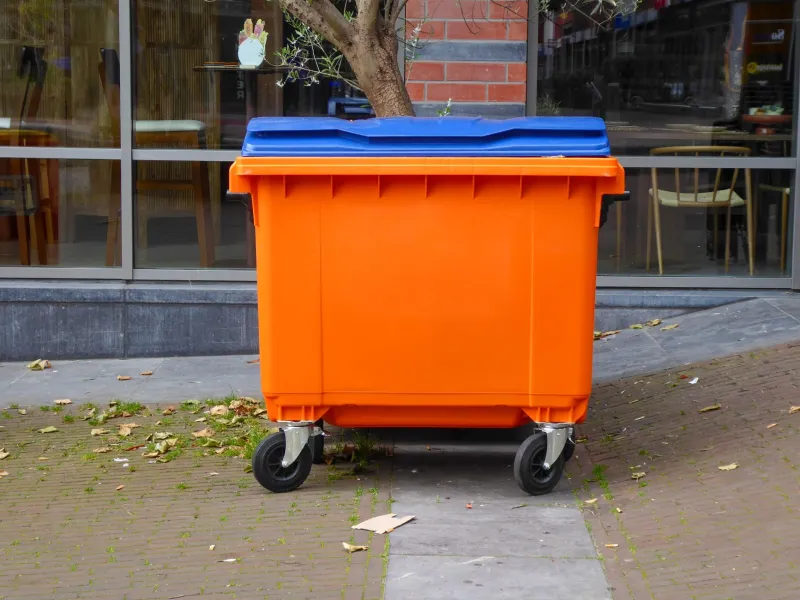
The brown bin is meant to be the quiet workhorse of Kingston’s waste service: a fortnightly collection for grass cuttings, hedge trimmings and the fallen leaves of a borough with more than its share of gardens. Since the council turned garden waste into a subscription service, however, the bin has become a small test of household budgeting — and, in some streets, a question about what happens when a paid-for service meets an unpaid-for mess.
Kingston Press has spent the past six weeks examining that question. We have analysed ward-level fly-tipping reports published by Kingston Council, compared the borough’s garden waste fee with those of neighbouring authorities, and asked the council what it knows about the link between charging and dumping. The picture is not one of a service in crisis. It is one of a service whose unintended consequences have not been properly counted.
A service that pays for itself
Kingston’s garden waste subscription for 2026-27 costs £78 per bin per year, with a discounted rate for residents on certain benefits. The council says the charge covers the cost of collection and disposal and has helped protect frontline services. That is a defensible position. Garden waste is not statutory household waste; councils are not obliged to collect it free of charge, and many have introduced fees as budgets have tightened.
But a fee changes behaviour. The council’s own waste strategy acknowledges that subscription schemes can lead to an increase in ‘home composting’ — and, less happily, to green waste appearing in residual bins or being left in public places. The strategy does not quantify the risk. Nor does it set out how the council would monitor it.
What the ward map shows
Using freedom of information responses and the council’s published fly-tipping dataset, we mapped reports of fly-tipping involving garden waste — grass, branches, hedge cuttings and soil — across Kingston’s wards for 2024-25 and 2025-26. The data is imperfect. Fly-tipping categories are broad, reporting practices vary, and not every report is verified. But the pattern is consistent enough to warrant attention.
Chessington South recorded the highest number of garden waste reports in both years, followed by Tolworth and parts of Norbiton. Kingston Town and Berrylands also saw clusters, often in back lanes and alleyways behind terraced streets. Coombe Hill and Coombe Vale recorded comparatively few. The wards with the highest reports are not simply the wards with the most gardens. They are also wards with a higher proportion of flats, rented homes and households on lower incomes — the households least likely to take out a £78 subscription.
That does not prove causation. Fly-tipping is a complex behaviour, driven by rogue traders, household clearance, poor waste awareness and simple opportunism. But the geography is suggestive. When the council introduced the charge, it did not publish an equalities impact assessment specific to garden waste. It now says it monitors fly-tipping ‘through established channels’. Residents in the worst-affected wards might reasonably ask what that means in practice.
The price next door
Kingston is not an outlier on price. Richmond upon Thames charges £75 per bin; Merton £70; Sutton £72; and Elmbridge, across the border in Surrey, £80. Wandsworth, which has a different waste contract, charges £85 for a comparable service. On that measure, Kingston’s £78 sits in the middle of the pack.
But price comparisons only go so far. What matters is the combination of price, enforcement and alternative disposal routes. Kingston’s household waste and recycling centres accept garden waste, but they are not equally accessible to residents without cars. The council’s bulky waste service does not cover garden waste. For a household in a first-floor flat with a small yard and no car, the cheapest option may be a trip to the tip — or a bin bag in the alley.
Enforcement: fixed penalties and fixed resources
Kingston issued 214 fixed penalty notices for fly-tipping in 2025-26, up from 168 the previous year. That sounds like progress until you set it against the 4,900 fly-tipping reports the council received over the same period. The council says it prioritises ‘serious and repeat’ cases and uses CCTV in hotspot areas. It does not publish a ward-level breakdown of enforcement action, making it impossible to judge whether the areas with the most reports are receiving proportionate attention.
We asked the council how many of its fly-tipping reports involved garden waste specifically; how many led to an investigation; and how many resulted in a prosecution. The council provided partial data and cited ‘commercial sensitivity’ for the rest. That is not good enough for a service that raises revenue and changes behaviour. If the council is asking residents to pay for a collection, it should be able to show that it is monitoring the consequences of non-collection.
The unintended audit
There is a better way to frame this. Garden waste charging is not inherently unfair or unwise. It can reduce the volume of waste sent to landfill, encourage composting and raise revenue for services that residents value. But it is a behavioural intervention as much as a financial one. The council should treat it as such.
That means publishing a ward-level fly-tipping dashboard that separates garden waste from other categories. It means commissioning an equalities review of the subscription scheme, including uptake by tenure and income. It means setting a clear enforcement target for hotspot wards and reporting against it. And it means asking a simple question: if a household cannot afford the fee and cannot get to the tip, where does the council expect the grass cuttings to go?
Questions for the council
Kingston Press has put those questions to the council. We will update this article if we receive a substantive response. In the meantime, the brown bin remains a small but revealing test of how the borough governs. A charge is easy to introduce. Counting its consequences is harder — and more important.
Residents who want to report fly-tipping can do so through the council’s website. Those who want to challenge the fee can do so at the next relevant scrutiny committee. The paperwork, as ever, is where the argument lives.