The Uncultivated Borough: Kingston’s Allotment Queues and the Land Nobody Counts
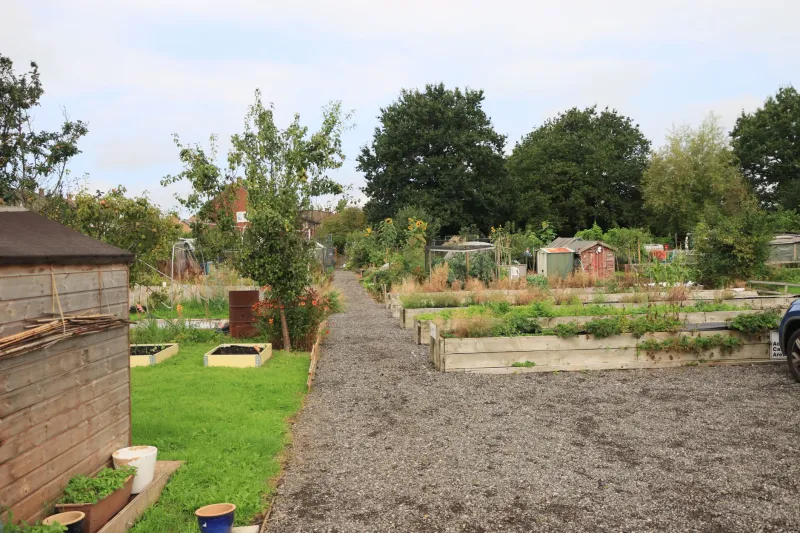
Kingston’s allotment waiting list is usually presented as a single figure. As of November 2026, the council’s published position suggests roughly 1,300 households are waiting for a plot somewhere in the borough. That number is useful for a headline. It is much less useful for a resident in Tolworth who has been told the wait may run to six years, or for a site secretary in Chessington who can point to plots that have not been properly cultivated since the spring.
The gap between the borough-wide queue and the reality on individual sites is the subject of this audit. Kingston Press has examined council figures, spoken to allotment society officers and compared waiting-list data with what is visible at site level. The picture is not of a simple shortage. It is of a system where demand is real, supply is constrained, and the administrative machinery for matching the two is uneven, opaque and, in places, slow.
One list, many queues
Kingston does not operate a single, uniform allotment queue in practice. Applicants may register with the council, but several sites are managed by allotment societies with their own records, their own local rules and their own informal expectations about who should be offered a plot next. The council’s headline figure aggregates demand; it does not show how that demand is distributed.
A snapshot compiled from figures provided by site societies and the council suggests the following pattern. The numbers are rounded and should be treated as indicative, but they illustrate the scale of variation.
| Site | Ward | Waiting list | Plots vacant or poorly tended | Annual rent (five-rod plot) |
|---|---|---|---|---|
| Berrylands | Berrylands | 240 | 11 | £72 |
| Tolworth Court | Tolworth | 310 | 7 | £58 |
| Chessington North | Chessington South | 190 | 14 | £46 |
| Blagdon Road | New Malden Village | 160 | 5 | £85 |
| Lower Marsh Lane | Kingston Town | 120 | 9 | £80 |
| Ham | Ham | 90 | 4 | £38 |
| Surbiton | Surbiton | 140 | 6 | £65 |
The table does not prove that plots are being withheld. Some vacant plots are genuinely unfit for letting: they need clearance, drainage work or boundary repairs. Others are in a grey zone. They are not advertised, not formally terminated, and not visibly cultivated. That grey zone is where the credibility of the waiting list is tested.
Rents, rules and the cultivation clause
Allotment rents in Kingston remain modest by comparison with many leisure activities. A five-rod plot can cost between roughly £38 and £85 a year, depending on the site and the facilities provided. Water, access, hedging and communal areas vary widely. So do the rules.
Most tenancy agreements include a cultivation clause. The exact wording differs, but the principle is consistent: a plot must be kept in reasonable cultivation and not used in a way that causes nuisance to neighbouring tenants. In practice, enforcement depends on site officers, allotment society committees and the willingness of the council to issue notices.
Site secretaries describe a familiar sequence. A plot begins to slip. Neighbours complain. The secretary makes informal contact. There may be a letter. If the tenant is elderly, unwell or facing other difficulties, the committee may try to help or allow time. If the plot remains neglected, the matter is referred to the council. The council may then inspect, write again and, eventually, consider termination.
The sequence is not unreasonable. It is also not quick. One long-standing secretary, who asked not to be named because they did not want to prejudice a current case, said: “We can see the problem from the gate. But we are not the landlord. By the time the paperwork catches up, the plot has been out of use for a season or more.”
The vacancy question
Kingston Council does not publish a live register of vacant allotment plots. Nor does it publish site-level waiting-list figures in a consistent format. Residents can ask, but the answer often depends on which site they name and whether that site is council-managed or society-managed.
This matters because vacancy is not the same as availability. A plot may be vacant but not lettable. It may be “under review”, awaiting clearance or subject to a dispute. It may also be a plot that has been informally absorbed into a neighbouring tenancy, or one where the tenant has died and the paperwork has not yet caught up.
The absence of a public register makes it difficult to test the council’s own performance. It also makes it difficult for allotment societies to reassure applicants that the queue is being managed fairly. If a site has a waiting list of 190 and a dozen plots that look abandoned, the obvious question is why. The answer may be benign. But without a published record, residents are asked to take it on trust.
Allocation: who gets the next key?
Allocation policies vary by site. Residency in the borough is usually required, and some sites give weight to proximity. Waiting time is the main factor, but not the only one. Plot size, accessibility needs and the applicant’s stated preference can all affect the offer.
Turnover is low. The average tenancy lasts years, not months, and many tenants give up plots only when health or circumstances force the issue. That is good for continuity. It is poor for new entrants. In the most pressured wards, the practical wait is measured in years. Applicants are often advised to register with more than one site, which inflates the headline waiting list but gives a more realistic picture of their chances.
The council has previously encouraged plot splitting on larger sites, but the practice is not universal. Some committees resist it because smaller plots can be harder to manage and may attract higher turnover. Others see it as the obvious answer to a queue of single residents and small households who do not need five rods. The result is a postcode lottery in miniature.
The enforcement deficit
Enforcement statistics are thin. The council does not routinely publish the number of cultivation notices issued, the number of tenancies terminated for non-cultivation, or the average time taken to resolve a reported neglected plot. When asked, officers can provide figures for a specific period, but there is no standing public dataset.
That is a transparency problem before it is a management problem. A resident who reports an untended plot has no easy way of knowing what happened next. A site secretary who refers a case has no public benchmark for how long the council should take. And a councillor asked about allotments has little to work with beyond anecdote and the single waiting-list figure.
The council says it works with allotment societies to ensure plots are cultivated and that enforcement action is taken where necessary. That may be true. But the absence of published data means the public cannot verify it. In a borough where demand for green space is high and trust in local institutions is not unlimited, that is a gap worth closing.
A modest transparency test
Kingston does not need a grand allotment strategy to improve this. It needs a clearer account of what it already manages. Publishing site-level waiting lists, a register of vacant and unavailable plots, and annual enforcement figures would cost little and answer most of the questions residents are already asking.
The council could also standardise the cultivation clause across sites, publish the criteria for plot splitting and set a target time for responding to reports of neglected plots. None of these measures would create new land. But they would make the existing system more legible, and legibility is the first condition of fairness.
The allotment queue is not just a numbers problem. It is a question of whether the borough knows what it owns, what it lets, and what it is waiting for. On the evidence available, the answer is: not always.