The Closing Hour: Kingston's Library Branches and the Quiet Rationing of Digital Access
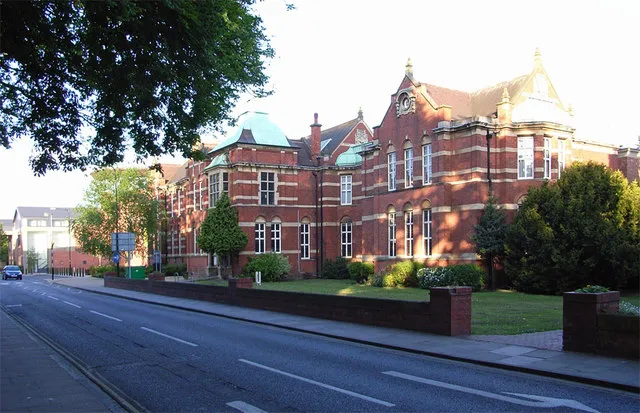
Photo: David Wright, CC BY-SA 2.0, via Wikimedia Commons
Kingston's library service is usually discussed as a cultural amenity. The annual reports talk of reading journeys, literacy and community space. Those things matter. But for a significant minority of residents, the branch library is also the only place in the neighbourhood with a working computer, a printer and someone paid to help.
That is why the published opening hours deserve the same scrutiny as any other front-line service. A timetable is not a neutral piece of administration. It is a statement of priority. It determines who can reach a counter, a terminal or a member of staff — and who cannot.
A service measured in hours
Kingston Press has examined the published timetables for the borough's library branches for the winter period of 2026-27, alongside the council's own library strategy and the 2026-27 budget papers. The pattern is not uniform, but it is consistent: the branches with the shortest opening hours are not always the smallest. They are often the ones serving neighbourhoods with the fewest alternatives.
The main Kingston library retains a broad weekly timetable, including Saturday opening. Several neighbourhood branches offer fewer than five full days a week, with at least one weekday closure and a shorter Saturday. In some cases the published timetable shows a lunchtime closure or an early afternoon finish that falls squarely within the hours when residents are most likely to need help with online forms.
The council describes these arrangements as part of a balanced approach to staffing and building costs. That may be true. But the effect is a form of rationing by timetable. A service that is open only when working residents are at work, or only when buses are less frequent, is not equally available to everyone who pays for it.
The computer queue
The digital divide is often framed as a problem of broadband or device ownership. In Kingston it is also a problem of doors. Universal Credit, council tax support, the housing register, school admissions and blue badge applications are all increasingly online by default. The library is the backstop: the place where a resident without a home computer can print a form, scan a document, reset a password or ask a human being why the website will not accept their evidence.
That backstop only works if it is open at predictable times and staffed by people who can help. Self-service terminals are useful, but they are not a substitute for assisted digital support. A resident who cannot use a computer without help is not helped by a machine that asks them to log in.
The council's library strategy acknowledges the role of libraries in digital inclusion. What it does not publish, at least not routinely, is the data that would show whether the strategy is working: the number of computer sessions by branch, the number of assisted form-filling interactions, the time residents wait for help, and the number turned away because a branch was closed.
Staffing is the hidden variable
Opening hours are only half the story. A branch can be open and still unable to offer the service residents need. Across the sector, libraries have shifted towards self-service borrowing and smaller staffed footprints. Kingston is no exception.
The distinction between open hours and staffed hours matters. A building may admit residents while the enquiry desk is unstaffed, the printer is out of order or the only member of staff on duty is dealing with a school visit. For a resident who needs help with an online claim, an open door is not the same as an available service.
Our audit found no evidence that the council is deliberately misleading residents about this. But it does not publish staffed hours separately from opening hours, which makes it difficult for residents to know when help will be available. That is a transparency gap, not a scandal. It is, however, the kind of gap that allows a service to shrink without anyone being able to measure the shrinkage.
Which neighbourhoods lose out
The timetable matters most where alternatives are thinnest. In the outer wards — Chessington, Tolworth, the Hook area and parts of New Malden — the library is often the nearest public building with free computer access. Bus links to Kingston town centre are not always quick, and not every resident can afford a taxi or a long round trip.
When a branch closes on a weekday, the cost is not borne equally. It falls on the resident who cannot travel, the parent who cannot leave the house, the older person who does not use a smartphone and the worker whose shift pattern leaves only one morning free. The council's equality impact assessments should be able to show whether these effects were considered. Residents are entitled to see them.
The statutory question
Under the Public Libraries and Museums Act 1964, local authorities have a duty to provide a comprehensive and efficient library service. That duty is not a guarantee of a branch on every corner. But it does require the council to show that its arrangements meet the needs of the communities it serves.
A timetable that closes the door on the residents who need the service most is a legitimate matter of public debate. So is the question of whether the council's library strategy is being delivered as written, or whether budget pressures are quietly rewriting it branch by branch.
The council should publish a straightforward annual audit: opening hours, staffed hours, computer sessions, assisted digital interactions and closures by ward. It should also explain how it measures the effect of timetable changes on disabled residents, older people and households without home internet.
None of this requires a new committee. It requires the same discipline the council applies to bin collections and parking. A library hour is not a luxury. For some residents, it is the only hour in the week when the civic system is reachable at all.