Where the Door Closes: Kingston’s Public Toilets and the Accessibility Ledger
Public toilets are the kind of civic infrastructure that is noticed only when it is absent. A parent with a toddler, an older resident managing a medical condition, a delivery driver between jobs, a disabled visitor planning a journey: all rely on a presumption that, somewhere reasonable, a door will open. In Kingston, that presumption is becoming harder to sustain.
A review of the council’s own public convenience register, responses to Freedom of Information requests and ward-level observations shows a network that has contracted steadily over the past decade. The pattern is not unique to Kingston — councils across London have withdrawn from direct provision — but the borough’s particular mix of a busy town centre, dispersed suburban wards and an ageing population makes the consequences sharper. The question is not simply how many toilets remain. It is who can reach them, when, and on what terms.
The map that shrinks
The council’s published list of public conveniences is shorter than many residents assume. Outside the town centre, provision is thin and uneven. Wards such as Chessington, Tolworth and Berrylands have few or no dedicated public facilities listed, leaving residents dependent on parks, libraries, supermarkets and the goodwill of businesses. In the north of the borough, the picture around Norbiton and Kingston Gate is similarly patchy once the main retail core is left behind.
This is not a sudden closure programme. It is attrition: a facility taken out of service during refurbishment and not reopened; a block transferred to a parks contractor and then quietly decommissioned; a site absorbed into a development brief. Each decision is small. Taken together, they redraw the map.
Freedom of Information responses suggest that the council does not maintain a single, current, publicly accessible dataset combining location, opening hours, accessibility and maintenance responsibility. Information is held across departments and contractors. That fragmentation matters: residents cannot plan a journey with confidence, and scrutiny is harder than it should be.
Opening hours and the afternoon gap
Where toilets remain, opening hours are often narrower than the public realm they serve. Several facilities close in the mid-afternoon, before the evening economy begins. Weekend provision can be reduced. Seasonal variation is common in parks.
The effect is a gap that falls hardest on people who cannot simply wait. A resident attending a medical appointment in the town centre, a carer travelling across the borough, a visitor arriving by bus: all may find that the facility closest to them is shut. The council’s community toilet scheme is intended to fill part of this gap, but participation is voluntary and hours vary by business.
It is worth being precise about what opening hours mean in practice. A toilet that closes at 4pm is not a toilet for the evening. A facility locked at weekends is not a facility for families. Provision is not a count of buildings; it is a count of usable moments.
Access and the Changing Places question
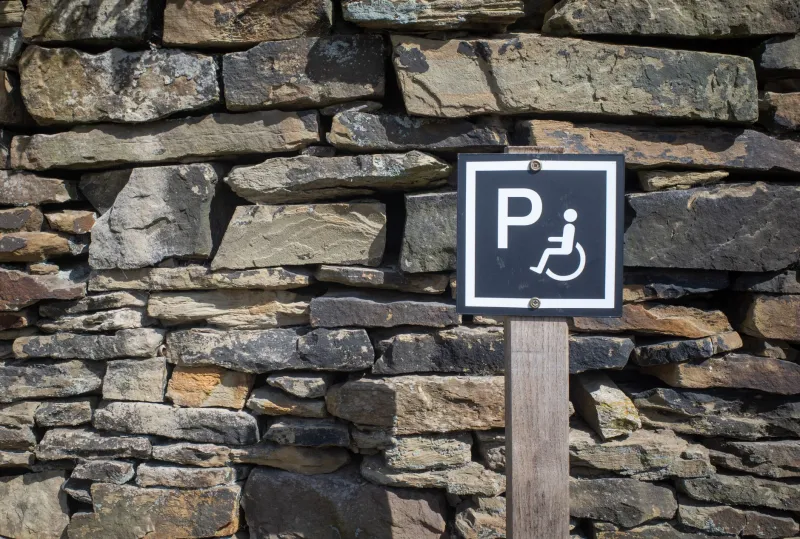
The accessibility picture is more troubling than the headline number of facilities suggests. Not every public toilet listed by the council meets modern standards for disabled access. Some older blocks have steps, narrow entrances or inadequate turning space. Radar key provision is not universal. Where a facility has been refurbished, access has often improved; where it has not, the gap between the borough’s stated inclusivity ambitions and its physical estate is visible.
The absence of a Changing Places facility in parts of the borough is a related concern. For people with profound and multiple disabilities, a standard accessible toilet is not sufficient. The council has supported Changing Places provision in some locations, but coverage is not borough-wide. Families who need such facilities plan journeys around them. When the nearest facility is a bus ride away, the cost is measured in time, money and dignity.
The community toilet scheme: partnership or substitution?
The community toilet scheme is the council’s principal answer to the shrinking network. Participating businesses agree to make their toilets available to the public, often in exchange for a small payment or promotional support. On paper, it extends the map without the council carrying the full cost of provision.
In practice, the scheme is uneven. Participation is concentrated in areas where businesses see a benefit — typically the town centre and busy high streets. Suburban wards are less well served. Opening hours track business hours, which may be shorter than public need. Some participants have withdrawn. The scheme is a useful supplement, but it is not a substitute for a planned, accessible, publicly accountable network.
The distinction matters for scrutiny. If the council presents the community scheme as equivalent to public provision, it obscures the places where no equivalent exists. A fig leaf is not the same as a door.
Maintenance, contracts and the money
Public conveniences are maintained through a mixture of in-house teams and contractors. FOI responses indicate that cleaning schedules, repair times and inspection records are not published in a consistent format. Residents report closed facilities and broken fittings; the council’s response times are not always visible.
The financial picture is similarly opaque. Savings from closures are rarely presented alongside the costs displaced onto residents, businesses and other public services. A closed toilet in a park may lead to increased cleaning costs elsewhere; a facility shut in a high street may push footfall and pressure onto shops. These are real costs, even if they do not appear in a single budget line.
What residents are told
Council communications tend to emphasise the community toilet scheme and the town centre offer. That is understandable, but it can create a misleading impression of borough-wide coverage. Residents in outer wards are told to use facilities that may be several bus stops away, or to rely on businesses that may not wish to participate.
A more honest account would publish a single map, updated regularly, showing every public and community toilet with opening hours, access details and the body responsible for maintenance. It would state clearly where provision has been withdrawn and why. It would treat public conveniences as infrastructure, not as an optional extra.
The questions that remain
Three questions deserve answers. First, what is the council’s minimum standard for public toilet provision across the borough, and how is it measured? Second, how does the community toilet scheme compensate for gaps in wards where participation is low? Third, what is the full cost of closures when displaced demand is taken into account?
Until those questions are answered in public, the map will keep shrinking by increments. Residents will keep planning around absence. And the borough’s claim to be a place that works for everyone will keep running up against a locked door.
Kingston Press will continue to track the register, the contracts and the closures. If you have information about a public toilet that has closed, changed hours or become inaccessible, contact the newsroom.