The Road Not Adopted: Kingston’s Private Streets and the Bill That Never Moves
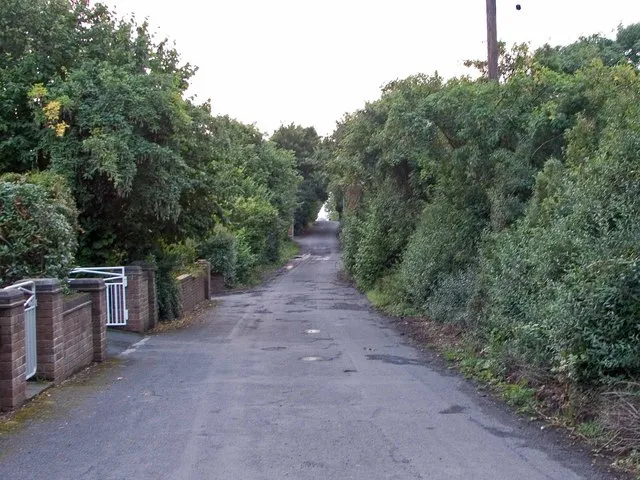
Photo: Mike White, CC BY-SA 2.0, via Wikimedia Commons
Kingston’s highway network is usually imagined as a single public estate: a continuous surface of adopted roads, drains, footways and street lights maintained at public expense. The reality is more fragmented. Across the borough, from the fringes of Chessington to pockets of Coombe and the older residential lanes around New Malden, there are streets that the council has never taken into its care. They are not hidden. They are simply outside the list of streets that the local highway authority is obliged to maintain.
For residents, the distinction can be stark. When a pothole opens on an adopted road, the council’s highways contractor is expected to inspect and repair it. When one opens on an unadopted road, the question of who pays is governed by deeds, covenants and, all too often, improvisation. The same household may pay the same band of council tax as a neighbour one street away, yet carry a private liability for the surface outside its front door.
The street that is not on the list
Under section 36(6) of the Highways Act 1980, local highway authorities must keep a list of streets that are maintainable at public expense. That list is the practical dividing line between a public road and a private one. An unadopted street is not necessarily a private gated enclave or a farm track. It can be an ordinary residential road, built decades ago, with wheelie bins, kerbs and a bus route at the end of it.
The legal position is not that the council has abandoned these streets. It is that the council has never accepted responsibility for them. In some cases, the original developer did not complete the works required for adoption, or the estate was laid out before modern standards applied. In others, adoption was never pursued because no one asked, or because the cost of bringing the road up to standard was judged too high. The result is a patchwork of responsibilities that residents often discover only when a drain collapses, a buyer’s solicitor raises an inquiry, or a refuse lorry refuses to enter.
What adoption actually requires
Adoption is often misunderstood as a repair scheme. It is better understood as a transfer of liability. For new developments, the usual route is a section 38 agreement under the Highways Act 1980, under which a developer agrees to construct roads to adoptable standard and the council agrees to maintain them once the works are complete. For older streets, section 228 allows the council to adopt existing roads, but only if they meet the required standard.
That standard is the sticking point. Adoption can require improvements to the carriageway, drainage, footways, kerbs and street lighting. For a short residential street, the cost can run into six figures, and the council may seek a bond or commuted sum to protect the public purse against defective work. The process is therefore not simply a matter of the council deciding to take over a road. It is a negotiation over who pays for decades of underinvestment, and how much of that bill should fall on the frontagers.
The council tax paradox
Council tax is not a charge for the street outside a resident’s door. It funds borough-wide services, including adopted highways, social care, waste collection and libraries. There is no rebate for living on an unadopted road, and no separate precept for private street maintenance. That is legally coherent, but it can feel deeply unfair to households who pay full council tax while also paying for gritting, patching and drain clearance themselves.
The grievance is less about the letter of the law than about visible fairness. Residents on unadopted roads are not asking for a discount on their council tax. They are asking why the public realm stops at their kerb, and why the council’s highways budget appears to reinforce a boundary that many of them never chose. In some cases, the road is used by delivery vans, taxis and visitors who have no idea they are on a private street. The liability is private; the traffic is public.
A register with gaps
Kingston Press asked the council for its current schedule of streets not maintained at public expense, together with any costed estimate of bringing them up to adoptable standard. The council’s published guidance confirms that adoption is considered case by case, and that residents can approach the highways service to discuss whether a road might be adopted. But the borough does not appear to publish a live, address-searchable map of unadopted streets, nor a borough-wide schedule with estimated liabilities.
That gap matters. Residents often rely on solicitors’ searches when buying a home, but the information is not always prominent, and it rarely comes with a realistic estimate of future maintenance. A private road can function perfectly well for years, then require a collective repair that no single household can afford. Without a clear public register, the risk is discovered late, and the cost is discovered later still.
The 2026 question
The council’s position is that adoption must be justified by public benefit and delivered to the required standard. That is a defensible principle. The harder question is what happens to streets that will never meet that standard without substantial investment, and whether the council has a strategy for them beyond responding to crises.
In 2026, Kingston needs a clearer account of its unadopted roads. That should include a published list, a plain-English explanation of frontager liability, and a transparent pipeline for any adoption schemes the council is considering. It should also address the emergency question: when a drain collapses or a road becomes unsafe, who makes it safe, and who recovers the cost? A private road can still be a public risk.
None of this is unique to Kingston. Unadopted roads are a familiar feature of English local government, and the legal framework is old. But the borough’s patchwork is a test of how honestly it explains the limits of the public realm. The unadopted mile is a small part of Kingston’s road network. It is a large part of the argument about who pays, and why the answer so often depends on which side of the kerb you live.