The Eligibility Border: Kingston’s SEND Transport and the Families Beyond the Route
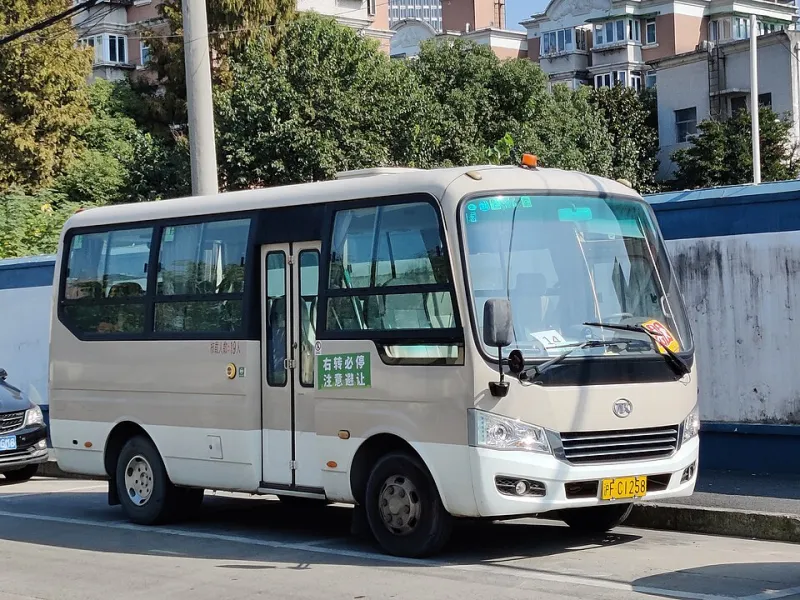
Photo: Zotyefan, CC BY-SA 4.0, via Wikimedia Commons
For most children in Kingston, the journey to school is a bus pass and a short walk. For a child with an education, health and care plan who cannot travel independently, it is a commission: a route, a vehicle, sometimes a passenger assistant, and a timetable that must hold. The difference matters because the second journey is not a convenience. It is a statutory service, and in Kingston it is under strain.
Kingston Press has examined the council’s home-to-school transport arrangements for children with special educational needs and disabilities, using figures supplied under the Freedom of Information Act, the council’s published transport policy and interviews with families and transport providers. The picture is not of a system that has collapsed. It is of one that is being held together by eligibility rules, route mergers and a thin supply of escorts, with the experience of families varying according to where they live and which school their child attends.
The statutory starting point
The council’s policy is clear in outline. It must arrange transport for eligible children under its home-to-school transport duties, and it must have regard to the SEND Code of Practice. The test is not a diagnosis alone. The council must decide whether a child can reasonably be expected to travel to school without arrangements. That word, reasonably, carries the weight. It covers distance, mobility, sensory needs, anxiety and the availability of a suitable adult. The Equality Act 2010 adds a duty not to discriminate. The policy is lawful on its face. The question is how it is applied.
Kingston’s published policy sets distance thresholds and an assessment process. Children under eight are generally eligible if they live more than two miles from school; older children at three miles. But the policy also allows discretion where a child cannot travel safely, even within those distances. That discretion is where the variation begins.
What the figures show
Figures supplied by the council for the 2025-26 academic year show 412 children receiving home-to-school transport, up from 377 in 2023-24. The gross contract value rose from £3.1m to £3.8m over the same period. The council said rising fuel, provider costs and complex needs had driven the increase.
Applications are not evenly spread. The highest numbers are in Chessington South, Hook and Chessington North, Tolworth and Norbiton, wards with a mix of longer distances to specialist provision and families who have moved for housing. A selected ward breakdown supplied to Kingston Press is below.
| Ward | Children with transport, 2025-26 | Applications refused | Average one-way journey time |
|---|---|---|---|
| Chessington South | 54 | 11 | 38 minutes |
| Hook and Chessington North | 47 | 9 | 36 minutes |
| Tolworth | 39 | 7 | 31 minutes |
| Norbiton | 33 | 8 | 29 minutes |
| New Malden | 28 | 5 | 27 minutes |
These numbers should be read with care. Small ward populations mean a handful of cases can shift a rate. But they point to a pattern: families in the south of the borough are more likely to be dependent on council-arranged transport, and more likely to face longer journeys when routes are combined.
The escort deficit
Kingston, like other London boroughs, contracts much of its SEND transport to private hire and minibus operators. The council’s own figures show 18 passenger assistant vacancies at the end of the 2025-26 academic year, with 27 routes affected by late confirmation or a change of operator during the year. For families, a missing escort is not a staffing statistic. It can mean a child cannot start school on time, or a route is merged with another, adding 20 or 30 minutes to a journey.
One parent in Chessington South, who asked not to be named, said her son’s journey to a specialist school in the north of the borough had been merged twice in 2025-26. She said the council had been responsive but the route changed with little notice. Another family in Tolworth said an escort was absent for a week and the council offered a taxi without a passenger assistant, which they declined. The council said it could not comment on individual cases but that it reviews routes where safety is raised.
Complaints and the reasonable test
Complaints data supplied to Kingston Press shows 42 stage-one complaints about home-to-school transport in 2025-26, of which 11 escalated to stage two. Four were referred to the Local Government and Social Care Ombudsman. The council upheld 14 stage-one complaints in full or in part. The average time from application to decision was 23 working days; in 9 per cent of cases it exceeded 40 working days.
The statutory duty is not breached every time a route is late. But delays and route changes can amount to a failure to arrange transport if they are persistent and avoidable. The Ombudsman has repeatedly said that councils must apply their policies consistently and explain decisions. The test is whether the council has looked at the child’s individual circumstances, not just the distance from home to school.
A postcode lottery, or an administrative one?
Families often describe the system as a postcode lottery. The phrase is imprecise. Kingston does not operate different eligibility rules by ward. But the interaction of geography, school placement and provider capacity produces different outcomes. A child in Ham or Petersham may be closer to a mainstream school but further from a specialist placement. A child in Chessington South may be within the distance threshold but unable to travel independently because of anxiety or sensory needs. The policy allows for that; the question is whether the assessment reaches it.
The council says it commissions transport on the basis of assessed need and that ward is not a factor. That is the correct legal position. But when Kingston Press compared ward-level application numbers with refusal rates, the variation was wide enough to warrant explanation. In Chessington South, 11 of 54 applications were refused in 2025-26; in New Malden, 5 of 28. The council said small numbers made ward comparisons unreliable. That is fair, but it is also why the council should publish the data with context rather than leave families to infer it.
What would restore confidence
Three changes would make the system easier to test. First, the council should publish an annual SEND transport report with ward-level data on applications, refusals, appeals, journey times and complaints. Second, it should separate the distance test from the needs assessment in its published statistics, so that families can see how many children are approved on discretionary grounds. Third, it should report escort vacancies and route changes to the council’s scrutiny committee, with an explanation of how safety is maintained when an assistant is absent.
None of this would resolve the underlying pressure. SEND transport is expensive, and the council is not alone in facing rising contract costs and a shortage of passenger assistants. But transparency would make it harder for support to be rationed by administrative friction rather than need.
The journey ahead
For the families waiting at the school gate, the argument is simpler. The council’s policy says the right thing. The question is whether the journey works in practice. Kingston’s SEND transport system is not failing every child. But it is asking families to absorb uncertainty, about eligibility, about escorts, about route changes, that the council itself should be managing. Until the data is published and the reasonable test is applied in the open, the distance between need and door will remain a matter of where you live.