The CIL Gap: Kingston’s Developer Levy and the Local Dividend That Keeps Slipping
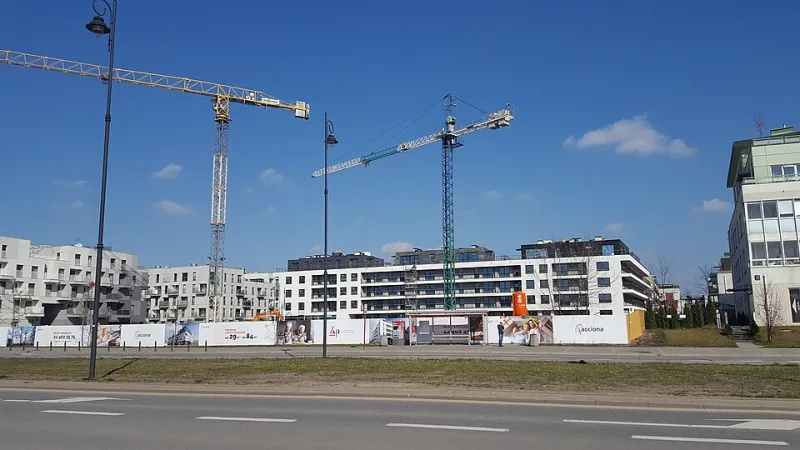
Photo: Wistula, CC BY-SA 4.0, via Wikimedia Commons
Community Infrastructure Levy (CIL) is meant to be the visible hand of development: a tariff paid by builders, pooled by the council and spent on the roads, schools, parks and community facilities that new homes and offices make necessary. In Kingston, the cranes are visible. The levy’s local dividend is harder to see.
Since 2020, Kingston Council has collected millions of pounds in CIL from developers. The borough’s skyline has changed, particularly around Kingston town centre, Tolworth and the riverside. Residents have a simple question: where has the money gone? Kingston Press has spent the autumn assembling a public ledger from infrastructure funding statements, committee reports, Freedom of Information responses and conversations with residents’ groups. The picture is not one of missing cash. It is one of missing traceability.
A levy designed to be spent, not hoarded
CIL is not a general-purpose fund. It is a planning charge, and councils are expected to spend it on infrastructure that supports growth. The rules are not secret. Kingston publishes an annual infrastructure funding statement setting out receipts, allocations and spend. A neighbourhood portion — 15 per cent of receipts, or 25 per cent where a neighbourhood plan is in force — is meant to give local communities a direct stake.
Across the five financial years from 2020-21 to 2024-25, the council’s published statements record CIL receipts of roughly £18.7m. Of that, around £9.1m remained unallocated or unspent at the end of 2024-25, according to the council’s own reporting. The figures are broad-brush. They are not a project ledger, and they do not tell a resident in Chessington whether the levy has paid for a crossing, a school place or a patch of paving.
Promises versus delivery
Kingston Press asked the council for a scheme-level breakdown: how much CIL had been allocated to each project, how much had been spent, and when each scheme would be delivered. The response pointed to published infrastructure funding statements and said project-level detail is available where schemes reach delivery. That is not the same as a public ledger.
What can be traced is a patchwork.
| Promise | Where it appears | Status in 2026 | What residents can see |
|---|---|---|---|
| Local transport and public realm improvements | Infrastructure funding statement | Partly delivered | Works have happened, but they are rarely labelled as CIL-funded |
| Education places | Council reports | Committed | No public delivery timetable tied to specific receipts |
| Open space and green infrastructure | Infrastructure funding statement | Unclear | No published project-level allocation |
| Neighbourhood portion | Statements and neighbourhood plans | Variable | Some areas can trace it; others cannot |
The pattern is familiar to community groups. Groups in Tolworth and New Malden told Kingston Press they had struggled to match the neighbourhood portion to projects in their area. One residents’ association said it had been told money was available but had not seen a published call for proposals in 2026. Another said its inquiries were met with references to the infrastructure funding statement rather than a list of live schemes.
The neighbourhood portion problem
The neighbourhood portion is the part of CIL closest to residents. In areas with a made neighbourhood plan, it rises to 25 per cent. Elsewhere it is 15 per cent. The money is supposed to be spent on local priorities, often through parish councils or neighbourhood forums. In Kingston, the process is uneven. Some groups have a working relationship with the council; others do not know where to start.
That unevenness matters because CIL is not just a technical accounting exercise. It is the price of consent. Residents are asked to accept denser development on the understanding that infrastructure will follow. If they cannot see the link between a new block of flats and a funded improvement, the levy becomes an abstraction.
The 2026 watchdog scorecard
Kingston Press has graded the borough’s CIL system against five tests. The ratings are not a judgment on individual officers. They are a measure of public accountability.
| Test | Rating | Reason |
|---|---|---|
| Collection | Amber | Receipts are published, but arrears and cash-flow are hard to follow |
| Allocation | Red | No public project-level ledger links CIL receipts to named schemes |
| Delivery | Amber | Some infrastructure has been delivered, but CIL labelling is inconsistent |
| Transparency | Red | FOI responses stop short of scheme-level spend and delivery dates |
| Community engagement | Amber | The neighbourhood portion exists, but the process is uneven |
The red ratings are not allegations of impropriety. They are findings about visibility. A resident cannot currently answer a basic question — how much CIL has been spent in my ward, and on what? — without submitting a Freedom of Information request and waiting.
What would restore confidence
The remedy is not exotic. Kingston could publish a rolling CIL ledger: project name, ward, allocation, spend to date, delivery date, status and the infrastructure category. It could map the schemes. It could publish a short annual resident report explaining the unspent balance and the reasons for it. It could align CIL reporting with Section 106 reporting, so that developer contributions are visible in one place.
The council should also publish a clear timetable for the neighbourhood portion, with an annual call for proposals and feedback on unsuccessful bids. That would turn a technical percentage into a democratic process.
None of this requires new money. It requires a spreadsheet, a map and a standing item at committee. The levy has not vanished. It has become invisible. In a borough where residents are repeatedly asked to accept growth, visibility is the minimum price of consent.