The Four-Mile Gap: How Kingston’s Outer Wards Lost Their Bus Service
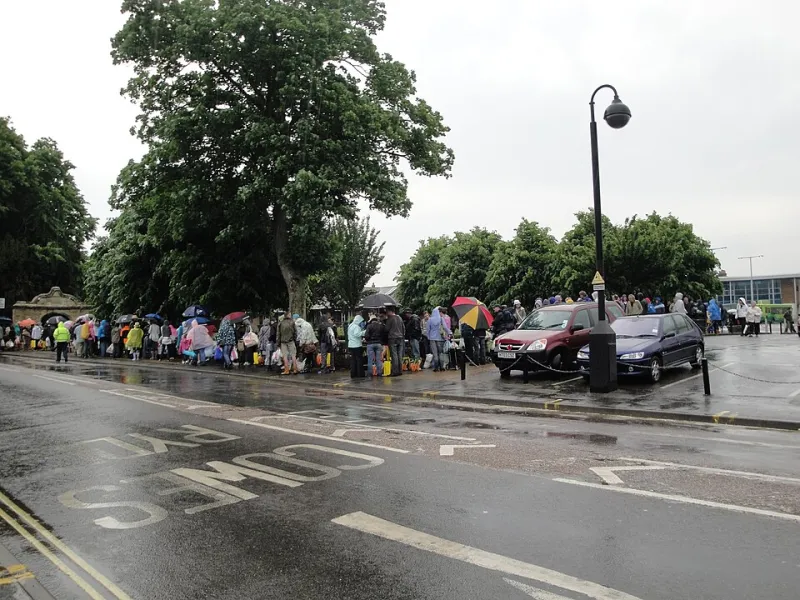
Photo: Editor5807, CC BY-SA 3.0, via Wikimedia Commons
On a wet Tuesday morning in Tolworth, the queue for the 281 stretches past the betting shop and back towards the ring road. A bus arrives. Then another. Then nothing for eighteen minutes. A care worker in a blue tabard checks her watch, sighs, and starts walking. She will be late, but not late enough to explain why.
This is not a catastrophe. It is an accumulation. Across Kingston’s outer wards — Tolworth, Chessington, Hook, Malden Rushett and the edges of Berrylands — the bus network has become thinner, less predictable and more expensive in time. The changes are not always dramatic enough to make a headline. They are felt in missed hospital appointments, longer school runs and jobs that quietly become impossible to reach.
The official language is technical: service adjustments, frequency changes, network reviews. The lived language is simpler. People are waiting longer, walking further and paying more for less.
The timetable as a budget line
Every bus mile is paid for somehow. In London, Transport for London plans and funds the network, with fares, the Mayor’s budget and government grants feeding the pot. Kingston Council does not run buses. It cannot summon a route into existence by resolution. But it does shape the conditions in which buses operate: through the Local Implementation Plan, through planning conditions, through developer contributions and through the lobbying that happens when a service is under threat.
That division of responsibility is convenient for everyone. TfL can point to its funding settlement. The council can point to TfL. Residents are left holding a timetable that does not work and a correspondence trail that rarely names the person who made the final call.
Kingston Press has reviewed TfL service data for routes serving the borough’s outer wards, alongside council correspondence and public statements from the past year. The picture is not of a single cut but of a series of adjustments: frequencies trimmed at the edges of the day, Sunday services reduced, routes rerouted away from less profitable roads. Each change has a rationale. Together they have changed the geography of the borough for people who do not drive.
What the data shows
The 465, which links Chessington and Kingston, remains the spine of the outer south. But a spine is only useful if the limbs connect. The K1 and K2, which knit together parts of Tolworth and the surrounding estates, have seen pressure on reliability. The 71 and 467 serve Chessington, but not always at the times when carers, cleaners and hospital visitors need them most. The 281, which carries people from Tolworth towards Kingston and beyond, is a lifeline that too often arrives full.
These are not abstract numbers. A bus that comes every twelve minutes is a different public service from one that comes every twenty. A route that runs until midnight is a different route from one that stops at ten. The difference is not measured in metres on a map. It is measured in whether a resident can take a shift, visit a relative or get home safely.
TfL’s own data shows that outer London depends more heavily on buses than inner London for access to jobs, hospitals and education. That is not a surprising finding. It is a structural fact. The further you live from the centre, the more the bus network functions as essential infrastructure rather than convenience. When service levels fall in places like Chessington and Tolworth, the impact is not spread evenly. It lands on people who have no alternative.
The correspondence trail
Council correspondence on bus services tends to follow a pattern. Residents write to their ward councillors. Councillors write to the relevant cabinet member. The cabinet member writes to TfL. TfL replies with a statement about network management and funding constraints. The loop closes without a decision that anyone can point to.
That is not to say the council does nothing. Officers attend TfL meetings. The council submits responses to consultations. Members raise specific routes in committee. But the public record rarely shows a clear line of accountability: who asked for what, who refused, and on what basis.
One Chessington resident who relies on the 465 to reach Kingston Hospital described the process as “writing into a hole”. She is not alone. A Tolworth parent said the walk from the nearest reliable stop to her child’s school had grown from five minutes to fifteen. A care worker in Hook said she had turned down evening shifts because she could not guarantee a bus home. These are individual stories, but they point to a collective problem: the network is being shaped by financial pressure, and the people who feel that pressure most are the least likely to be in the room when decisions are made.
Who is listening
The honest answer is that no single person designs Kingston’s bus network. TfL sets the routes. The Mayor sets the funding envelope. The government sets the grant. The council influences, advocates and occasionally negotiates. That is a system, not a villain.
But systems can be opaque, and opacity has a cost. Residents who cannot see how a decision was made are less likely to trust the next consultation. Councillors who are not given clear data are less able to challenge a service change. And a council that does not publish its bus correspondence in a readable form cannot expect the public to understand why the 465 is crowded, why the K2 is late or why the walk from the stop gets longer every year.
There are practical steps Kingston could take. It could publish a quarterly bus service dashboard for the borough’s outer wards, showing frequency, reliability and passenger numbers. It could put TfL representatives in front of the relevant committee more than once a year. It could use Section 106 and planning negotiations to secure bus infrastructure where new development adds passengers. None of this would reverse a funding settlement. All of it would make the argument more honest.
The bus stop is a small piece of civic furniture. It is also a test of whether local government is listening. In Tolworth and Chessington, the queue is getting longer. The question is whether anyone in the room is counting.