Behind the Shutters: Who Owns Kingston’s Empty Shopfronts — and Why Enforcement Keeps Stalling
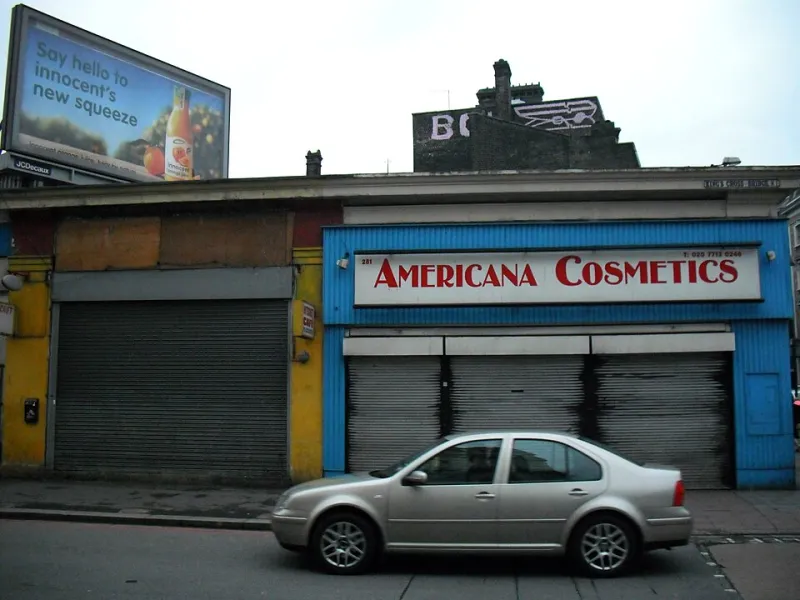
Photo: Lucy Fisher from London, UK, CC BY 2.0, via Wikimedia Commons
A boarded window in Kingston town centre is not only a gap in the street. It is a title deed, a business rate account, a planning history and, sometimes, a waiting game. As of 8 November 2026, Kingston Press has cross-referenced Land Registry records, council enforcement data and planning applications for vacant commercial premises across the borough. The aim was simple: follow the money behind the shutters.
The findings do not point to a single villain. They point to a system in which ownership can be distant, enforcement can be slow and regeneration promises can outrun the paperwork.
The geography of vacancy
We identified 47 units that appear to have been vacant for 12 months or more across four district centres: Kingston town centre, Tolworth Broadway, New Malden High Street and Surbiton. The count is a snapshot, not an official statistic. It combines site visits, council enforcement records and planning application histories. Some units may have been under offer. Some may have been temporarily closed for fit-out.
The cluster matters. Kingston town centre has the highest number of long-term empty units, but Tolworth and New Malden have the highest proportion relative to their retail floorspace. The types differ too. In Kingston, several vacant units sit in larger blocks where the freeholder may be waiting for a redevelopment decision. In Tolworth, smaller parade units are more likely to be held by individual landlords or family trusts.
Who owns the shutters?
Of the 47 units, we could match 31 to Land Registry title records. The remainder were complicated by leasehold structures, unregistered titles or addresses that did not match council records. Of the 31 matched titles, 14 were owned by companies registered outside the borough. Seven were owned by individuals or trusts with correspondence addresses elsewhere in Surrey or London. Four were owned by pension funds or institutional investors. Six were owned by companies or individuals with a Kingston upon Thames address.
The ownership chain is often longer than the title suggests. A shopfront may be leased to a retailer, sublet to a pop-up, then vacated while the lease continues. The freeholder may be a holding company whose directors are elsewhere. The council’s enforcement team can serve notices on the owner, but identifying the right person to serve can take weeks.
Enforcement: the paperwork versus the pavement
Kingston Council has powers to act on poorly maintained vacant premises. It can issue notices under section 215 of the Town and Country Planning Act 1990 requiring land to be tidied. It can pursue compulsory purchase in extreme cases. It can also use empty property rates and planning conditions, though each tool has limits.
Our review of enforcement records found nine section 215 notices issued in 2026 in respect of vacant commercial premises. Three related to the same parade in Tolworth. The council confirmed that no compulsory purchase order has been pursued for a vacant shopfront in the past three years. That is not necessarily a failure. Compulsory purchase is expensive, slow and rarely proportionate for a single unit. But it means the council’s main lever is persuasion, followed by paperwork.
The gap between promise and action is clearest in regeneration areas. Planning applications often include commitments to bring ground-floor units back into use. Those commitments can be secured through conditions or planning obligations. Yet residents see boarded windows for years after permission is granted. The council can enforce, but only if it monitors and if the breach is clear enough to act upon.
What owners say they are waiting for
Not every empty unit is neglected. Some owners are waiting for a lease to expire, a planning decision, a building survey or a funding round. Others are waiting for values to recover. The phrase hope value appears in several planning statements — the idea that a site is worth more with permission for a different use than it is as a shop.
That is a rational commercial position. It is also a civic problem when a parade loses its footfall. The council cannot force a landlord to open a shop. It can make vacancy visible, charge where the law allows and use planning leverage when a new scheme comes forward. The question is whether it does so consistently.
The regeneration gap
The council’s town centre strategy speaks of active frontages, diverse uses and a high street that works for residents as well as visitors. Those are reasonable ambitions. The delivery test is less glamorous: how many long-term vacant units have been brought back into use, how quickly, and with what enforcement behind the promise?
Kingston Press asked the council for the number of vacant commercial units brought back into use in 2025–26 following enforcement action. The council said it does not hold that figure centrally. That is a disclosure gap, not a scandal. But it makes it hard to judge whether the strategy is working.
How to report a long-term vacancy
Residents can act. First, note the address and take dated photographs. Second, check the council’s planning application portal for any live or recent applications. Third, report the unit to the council’s planning enforcement team through its online form, asking specifically whether a section 215 notice is being considered. Fourth, request the title register from Land Registry for a small fee if you want to identify the owner. Fifth, raise the case with your ward councillors and ask for it to be logged in the council’s enforcement tracker.
A useful question for scrutiny councillors is simple: how many vacant shopfronts in this borough have been subject to enforcement action, and how many were brought back into use as a result? The answer should be public. The shutters should not be the only thing residents can see.